

An Inside Into Facial Balancing
/in Fillers /by Mary Beth MartinIntroduction
Facial filler is one of the most talked-about aesthetic treatments today—and when done well, one of the most subtle and transformative. Expertly placed filler is designed to look completely natural, remain undetectable, and work with your own anatomy. Rather than changing your face, facial balancing with dermal filler adds supportive structure, softens signs of aging, and creates a refreshed appearance.
- In this blog, we’re cutting through the noise to answer the questions we hear most often: what dermal filler actually is, whether Sculptra is considered a filler, common concerns and myths, what to do if you don’t love your results, and how modern filler should truly be approached for natural, balanced outcomes.
At Elite, we believe education is just as important as the treatment itself. Our philosophy is rooted in a thoughtful, customized approach to injectables—because no two faces are the same. We don’t believe in overfilled features or one-size-fits-all plans. Instead, we focus on enhancing facial structure, restoring subtle volume, and maintaining harmony/balance, so results never look obvious or overdone.
As we always say, the best injectables are undetectable. If you’ve been curious about filler but unsure where to start, or if you simply want a better understanding of what’s possible when done correctly, keep reading below to learn more.


Table of Contents
What is dermal filler?
In short terms, dermal filler is an injectable gel used to restore lost volume, define/enhance facial contours, and improve overall facial harmony.
Most fillers used today are made from hyaluronic acid (HA)—a naturally occurring molecule in the skin that attracts and holds moisture. There are also other types of fillers in the aesthetic world, including Radiesse (calcium hydroxylapatite) and biostimulators like Sculptra (made from PLLA), and PRP/PRF and EZ-Gel (made from your own blood).
Each injectable has their own unique benefits, but with so many different options, it’s easy to feel confused about which option is right for you.
We always recommend a thorough consultation with one of our providers. During this time, we evaluate your anatomy, goals, and medical history to create an individualized treatment plan for the most natural, balanced results.
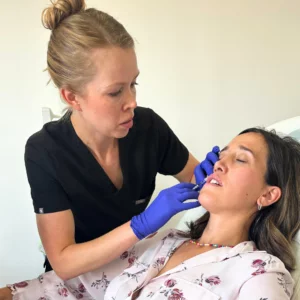
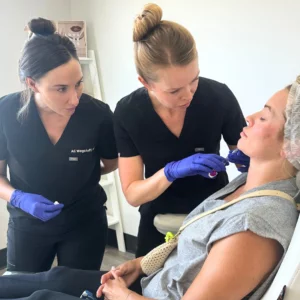
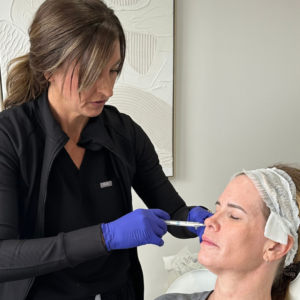
What is the difference between dermal filler and biostimulators?
While dermal fillers and bio-stimulators can both improve volume and skin quality, they work in very different ways.
Below is a breakdown of how the two work:
Dermal fillers are gel-like products (most commonly made of hyaluronic acid) that are injected to provide immediate volume restoration and definition. They physically fill lines, folds, or hollow areas, and can enhance facial features like lips, cheeks, chin, jawline, and under-eyes. Popular HA filler brands on the market include: Juvederm, Versa, Restylane, and RHA.
- Injectors tend to choose which filler products they see best fit for each area. Each filler product has different thickness, flexibility, and versatility fit for customized results. Results are seen right away, and typically last anywhere from 6-12 months depending on the product and area.
Bio-stimulators, on the other hand, strive to build natural collagen and elastin within the skin over time. Examples of common bio-stimulators on the market include: Sculptra (poly-L-lactic acid), Radiesse (calcium hydroxylapatite), and PRP/PRF/EZ-Gel (made from your own blood).
- These injections are great for those seeking a more natural approach to injectables, looking to soften lines, improve skin texture, and create gradual volume restoration. A series of treatments may be needed, results are variable and develop slowly over weeks to months, and can last 1–2+ years as your own collagen builds.
Both dermal fillers and bio-stimulators are great options for those seeking natural facial rejuvenation. Choosing which is right for you depends on factors such as your anatomy, goals, and how quickly you want to see results. Many facial balancing treatments use a thoughtful combination of both for best aesthetic results. That’s why it’s so important to be evaluated by an experienced provider who takes the time to understand your facial anatomy, medical history, and long-term goals, ensuring the treatment chosen is right for you.
What are the benefits of filler?
Dermal fillers offer a versatile, customizable way to enhance facial features and restore youthful balance—when placed thoughtfully by an experienced and artistic injector.
Here are some of the top benefits:
- Restores Volume Loss: Helps replenish areas that naturally hollow with age, such as cheeks, temples, and under-eyes.
- Enhances Facial Contours: Adds subtle definition to features like the chin, jawline, and cheeks for a more sculpted, harmonious look.
- Smooths Lines & Wrinkles: Softens common areas of concern like smile lines, marionette lines, and deeper creases for a more refreshed appearance.
- Improves Lip Shape & Hydration: Reduces lines and enhances lip borders, symmetry, and hydration for a soft, natural-looking lip.
- Can provide Immediate Results: Clients often see improvement right away, with results continuing to settle over the following 2-4 weeks.
- Boosts Skin Quality: Certain fillers can increase hydration and stimulate collagen for healthier-looking skin over time. This is usually a benefit of bio-stimulating injections like Radiesse.
While filler offers many benefits, your injector is ultimately who creates the balance and natural harmony from filler results. At Elite, we always say “the best injectables are undetectable”—because expert technique, an artistic eye, and a deep understanding of facial anatomy are just as important as the product itself.


Is filler painful?
Pain associated with filler is a very common concern—and the truth is that everyone’s pain tolerance is different. Most clients, however, find filler injections to be tolerable, especially when the treatment is performed in a setting that prioritizes comfort and clear communication.
Here are a few key points to know regarding filler injections:
- Most fillers contain lidocaine, which helps numb the area as the product is placed.
- Numbing agents may be available! It’s common for med spas to offer numbing agents for injectable treatments—such as topical numbing cream, vibration/distraction tools, or injectable/local numbing (used in certain areas).
- Some areas are more sensitive than others. Areas like lips, chin, and around the mouth can tend to feel a little more sensitive for clients versus areas like jawline and cheeks.
- If something feels too tender or uncomfortable, tell your provider so they can make adjustments to improve your comfort.
- Most clients describe the sensation as pressure, a pinch, or mild stinging.
At Elite, we strive to create a calm, supportive experience where your comfort matters just as much as your results. With proper numbing, injection technique, and communication, filler treatments are generally very manageable for the majority of clients. Learn more about our facial balancing by clicking the link below.
Does filler look natural?
Yes—filler can look extremely natural, but this outcome depends almost entirely on the injector, not the product itself. Natural results come from a thoughtful approach, an artistic eye, and a deep understanding of facial anatomy.
Below are some factors that determine a natural result from filler:
- Injector Technique: Skill, experience, and precision are what create soft, seamless results. Overfilling or incorrect placement leads to an unnatural appearance.
- Aesthetic Philosophy: Injectors who prioritize balance, proportion, and subtle enhancement consistently achieve natural-looking outcomes. Sometimes this even means being told “no” 😉.
- Product Selection: Filler selection is based on your specific anatomy or treatment goals. An experienced injector will help select the right product and is essential for achieving natural results.
- Customization: Your facial structure, skin quality, and desired result guide how much filler is used and where it’s placed. Personalized treatments are essential, because everyone is different.
When performed by a skilled injector, dermal filler can beautifully enhance your features, restore balance, and help you look like a refreshed, confident version of yourself. Choosing the right injector makes all the difference. Click the link below to learn our 6 tips for selecting an injector you can trust.
Elite's approach to facial balancing
At Elite Medical & Aesthetics, our philosophy around facial filler is rooted in artistry, safety, and customized treatments. We believe filler should never overpower your natural features—it should enhance them in a way that feels seamless, balanced, and uniquely you, just refreshed.
- Our injectors take an artistic approach to every treatment, evaluating facial structures, proportions, and movement to create results that are natural to each client.
- Safety is always our first priority, including the type of products we use in the office. Our providers are medically trained nurses (NP’s and RN’s), highly experienced, and are passionate about a holistic approach to aesthetics. We use a variety of FDA-approved products, each chosen intentionally for its safety, less toxic formulations, and longevity.
- Because no two faces are the same, we design fully customized treatment plans for each client. Each consultation is thorough and transparent, allowing us to set realistic expectations, explain what each product is capable of achieving.
- Overall, our facial balancing approach focuses on assessing facial features as a whole, instead of one area. By treating multiple areas—strategically and subtly—we are able to create a natural result that is a refreshed, enhanced version of yourself!
Learn more about our office, team, and values by watching the video below.
What is the aftercare like for filler?
Aftercare for dermal filler is simple, but understanding the timeline is helpful and sets realistic expectations before getting the treatment done.
Below is an example timeline of healing from facial filler:
- Immediately after treatment, it’s normal to experience swelling, redness, bruising tenderness, and even small lumps or unevenness from where the product was placed.
- The first 24–48 hours typically brings the most noticeable swelling. During this time, it is best to avoid strenuous exercise, alcohol, heat exposure (saunas, hot tubs, hot yoga), and any pressure on the treated area. After 24 hours, makeup can be applied.
- By days 3–5, most clients start to notice swelling subsiding and feel a little more “normal”. Bruising, if it occurs, can last anywhere from a few days up to two weeks, depending on the area treated and individual healing responses. Taking homeopathic arnica and bromelain during this time can help with swelling/bruising.
- From weeks 1–2, the filler continues to integrate with the tissue and usually starts to look more settled and healed.
- Final results aren’t revealed until weeks 2-4, at this time a follow up appointment with the provider is usually scheduled to ensure proper healing.
A clear aftercare plan and realistic timeline is usually provided before treatment, but always ask your provider about questions/concerns.
*Of Note: Always follow your provider/office’s pre and post treatment guidelines for best results and adequate healing.
How long do fillers last?
The longevity of dermal filler varies depending on the type of filler used, the area treated, metabolism, and the amount of product placed. In general, most hyaluronic acid (HA) fillers last anywhere from 6 to 12 months. For example, softer fillers used in the lips/around the mouth typically last closer to 6-9 months due to constant movement, while firmer fillers placed in the cheeks or jawline often last around 12 months.
Bio-stimulator injections like Sculptra and Radiesse, may last longer, around 18–24 months, because they support natural collagen production.
- Keep in mind, everyone metabolizes filler differently—clients with a faster metabolism, high activity levels, or expressive facial features may notice their filler dissolving sooner. Annual maintenance treatments are recommended to help maintain balanced results. We also have some additional tips on how to make the most out of your aesthetic treatments, read more by clicking the link below.
Do fillers work instantly?
Yes, most dermal fillers provide visible results immediately after treatment. However, it’s important to understand that what you see in the mirror right after treatment is not the final result. Swelling, mild bruising, and temporary asymmetries can appear within the first 24–72 hours and last anywhere between 2-4 weeks.
As the swelling settles and the filler integrates with your tissue over the next 1–2 weeks, the results soften and become more natural-looking. Most providers schedule follow-up appointments between 2 and 4 weeks to ensure everything is healing well and to make any minor adjustments if needed.
What areas can I get filler?
Common areas that can be treated with filler include:
- Lips
- Cheeks
- Chin
- Jawline
- Nasolabiol folds (smile lines)
- Marionette lines
- Temples
- Under eyes
- Hands
- Neck
- Some body parts like the buttocks, above the knees, arms etc.
While each area can be treated individually, the most natural results often come from facial balancing, which means enhancing multiple areas together to maintain harmony and proportion. This approach helps clients look refreshed and naturally beautiful—never overfilled.


What to do if I don't like my filler?
If you’re unhappy with your filler results, the most important step is to contact your provider or injector as soon as possible. Early communication allows for the provider to properly assess the situation, ask questions, and provide a plan for the best solution.
There are two main approaches if intervention is needed: dispersing and dissolving.
- Dispersing refers to techniques used to move or soften the filler or bio-stimulator when the issue is related to placement or minor asymmetry. This may include strategic massage performed by your provider, saline or steroids injections to help break apart the matter, or allowing more time for the filler to integrate naturally, especially within the first couple of weeks if swelling is still present.
- Dissolving, on the other hand, involves injecting an enzyme, called hyaluronidase, to break down hyaluronic-acid–based fillers. This is a safe and effective option if the filler has migrated or simply isn’t providing the desired aesthetic goals. Dissolving can be done partially or completely depending on the provider’s recommendation and treatment plan.
Highly trained and experienced injectors will give informed consent before treatment, prioritize safety, and provide support if intervention is needed from start to finish. To learn more about ways to reverse filler, read our full blog below with even more detail!
Lip filler before and after dissolving:
Here, you can see the before and after images of a real client who had migrated HA lip filler. After the dissolving process, she was able to get her lips re-filled and the results are more natural, subtle, and enhance her beautiful lip shape.

Is Sculptra filler?
Sculptra is often talked about in the same conversations as dermal fillers, but it’s actually not a traditional filler. While both are injectable treatments that enhance facial volume and improve signs of aging, they work in completely different ways. Here’s a breakdown below:
- Traditional hyaluronic acid (HA) fillers add instant volume by placing a gel-like substance directly beneath the skin. This gel provides structure, shape, and hydration immediately, making fillers ideal for clients who want quick, noticeable enhancement. HA fillers can also be dissolved if needed, offering flexibility and reversibility.
- Sculptra, on the other hand, is a biostimulator, not a filler. Instead of adding volume instantly, it’s made of poly-L-lactic acid (PLLA), a material that gradually stimulates your own collagen production. After the injections, your body builds new collagen over several weeks, creating subtle, natural-looking volume and improved skin quality. A series of treatments may be needed and results tend to appear more slowly. Sculptra cannot be dissolved once collagen has formed.
In short, HA fillers give immediate structure, while Sculptra works to build natural collagen with time. Both have their place depending on aesthetic goals. Scheduling a consultation helps determine which option—or combination—is best for you! For more information on Sculptra versus filler, read our blog below.
Conclusion:
All in all, facial filler is never solely about the product—it’s about the plan, the technique, and most importantly, the injector behind it. When done correctly, filler is a highly customized treatment that takes into account facial anatomy, movement, balance, and long-term skin health. The difference between obvious filler and seamless, beautiful results comes down to the provider’s experience, artistic eye, and commitment to safety and restraint.
At Elite, every treatment begins with a thorough consultation and an individualized approach, ensuring results that enhance rather than overpower your natural features. The goal is not to look “done,” but to look refreshed, balanced, and confident. Book a consultation below to talk with one of our providers.

